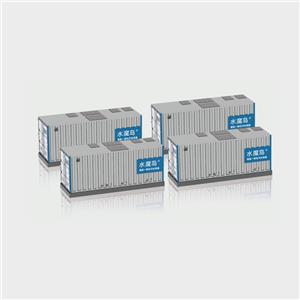
Denitrification Deep Bed Filters

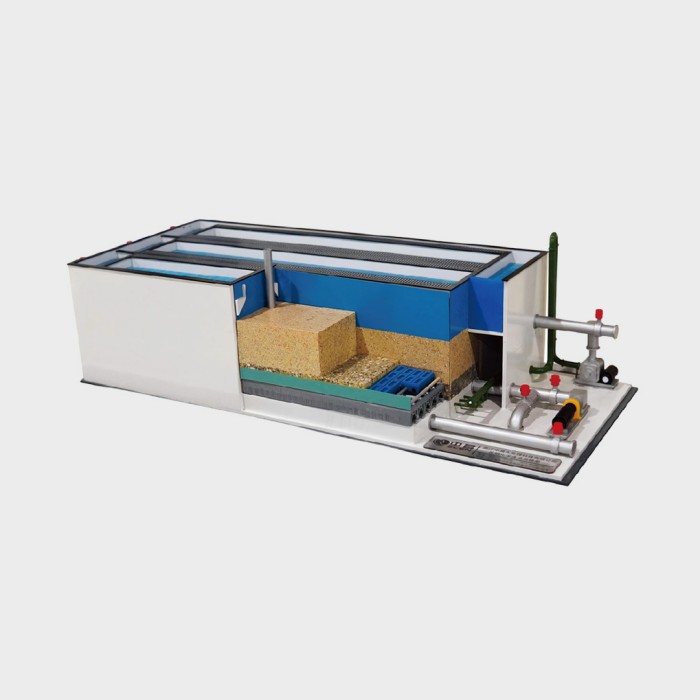
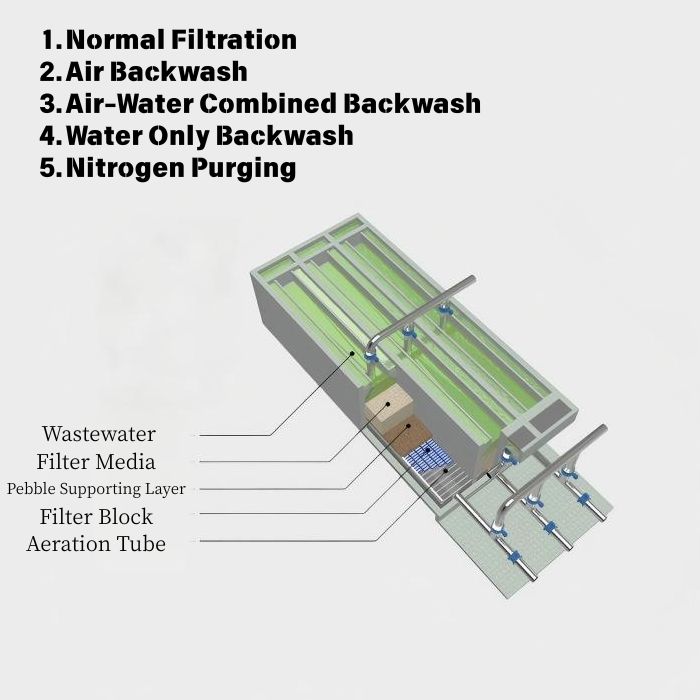
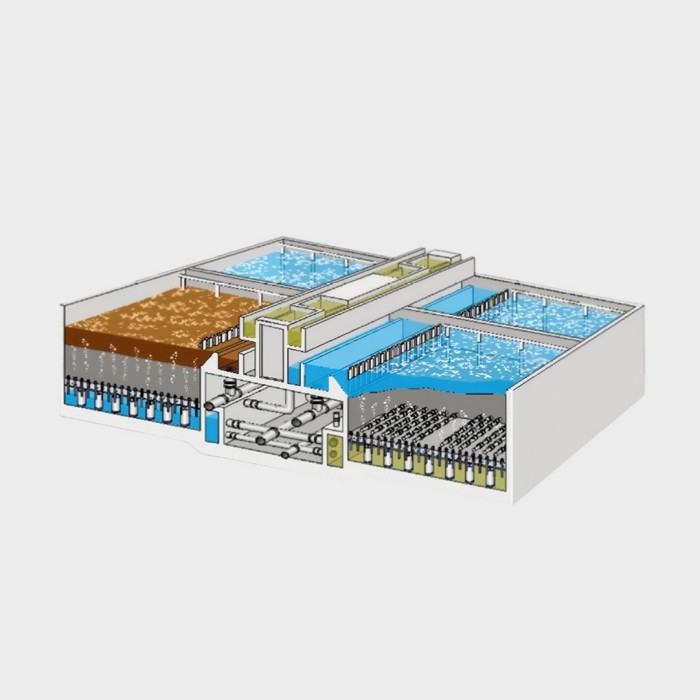
The denitrification deep‑bed filter is an advanced treatment unit that combines biological denitrification and filtration in a single process. It utilizes specially graded, high‑strength ceramsite (expanded clay) or quartz sand as the biofilm carrier for denitrifying bacteria. When external carbon source is added, the filter operates as a denitrification deep‑bed filter capable of removing TN, SS and TP. When carbon source addition is discontinued, it functions as a conventional deep‑bed filter, effectively removing SS and TP.
To ensure uniform air‑water distribution and efficient air‑water backwashing, the filter is equipped with air‑water distribution filter blocks. Their unique structural design creates an internal air‑reflection chamber. During backwashing, the mixture of air and water is forcefully discharged through the adjacent gaps, distributing air and water evenly across the entire filter bed area. These filter blocks are maintenance‑free throughout their service life, with no wearing or consumable parts, and require no replacement. Our company is a contributing member to the development of the industry standard Filter Blocks for Water Treatment (CJ/T 47‑2016).
Process Flow
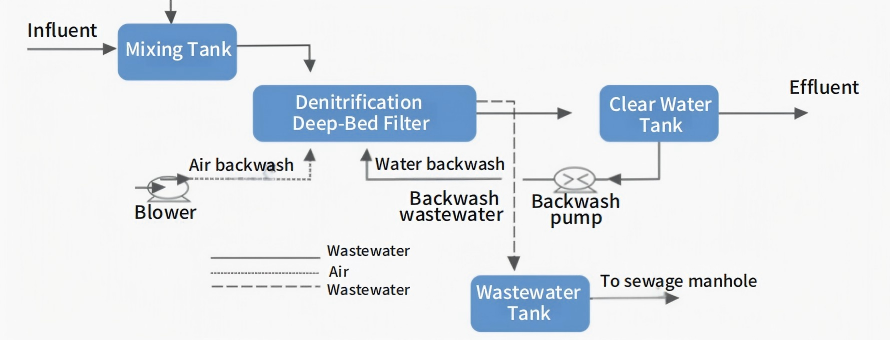
Mode 1: The filter operates in direct filtration mode as a deep‑bed filter, effectively removing SS while enhancing the removal of BOD, COD, and other pollutants to ensure compliance with discharge standards.
Mode 2: When effluent TP exceeds the standard, the filter can be easily adjusted to operate as a micro‑flocculation deep‑bed filter by adding coagulants, effectively removing both SS and TP to ensure full compliance of effluent quality.
Mode 3: When effluent TN fails to meet the standard, carbon source is added and the filter operates as a post‑denitrification filter to ensure full compliance of all effluent parameters.
Other Mode: When considering the integration of standard compliance (Class IA) with water reuse projects, the deep‑bed filter is the preferred process. The effluent can meet the water quality requirements for ecological landscape, urban miscellaneous use, and industrial water, and can also serve as a pretreatment process for wastewater desalination.
Technical Advantages
Multifunctionality: The denitrification deep‑bed filter combines multiple functions in one unit, achieving simultaneous removal of TN (with carbon source addition), SS (down‑flow gravity filtration), and TP (co‑flocculation), with stable compliance for all three water quality indicators and reliable operation. After treatment, effluent TSS can be as low as ≤3 mg/L (typically 5–10 mg/L), TP as low as ≤0.3 mg/L (typically 0.5 mg/L), and TN as low as ≤3 mg/L.
Reliability: As the preceding treatment processes of most domestic wastewater treatment plants are relatively vulnerable, the filter serves as a final safeguard to ensure stable TN compliance when influent quality fluctuates significantly. It is also capable of meeting increasingly stringent TN discharge standards in the future. The effluent contains no biofilm residue, with stable and reliable water quality — demonstrating true reliability.
Process Flexibility: When TN in the effluent from upstream biological processes can meet the discharge standard during summer, the filter can be flexibly converted to operate as a conventional deep‑bed filter without carbon source addition, accommodating seasonal variations and reducing operating costs — demonstrating excellent economic efficiency.
Low Investment Cost: The filter features a specially designed influent weir and proprietary nitrogen‑stripping technology, ensuring minimal carbon source consumption and energy usage.
Maintenance‑Free: The denitrification deep‑bed filter requires no maintenance throughout its service life, with no wearing or consumable parts.
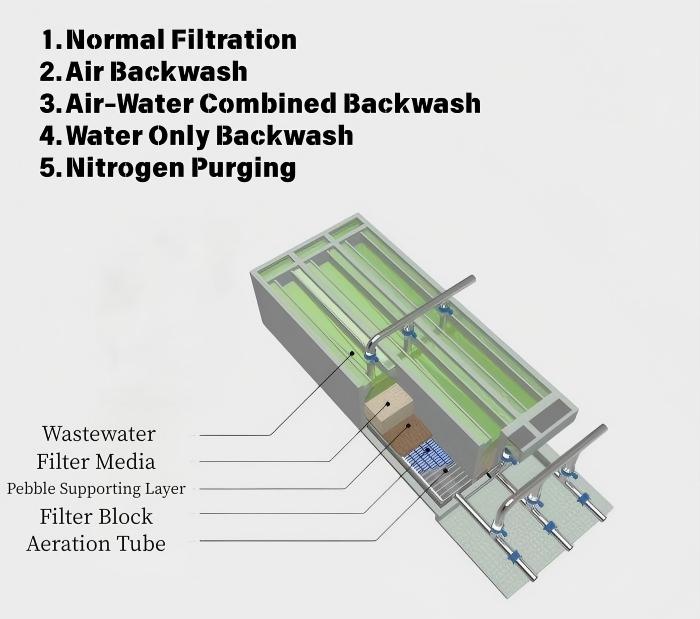
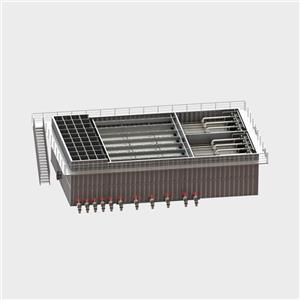
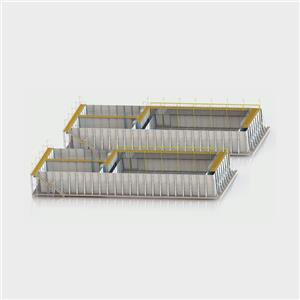
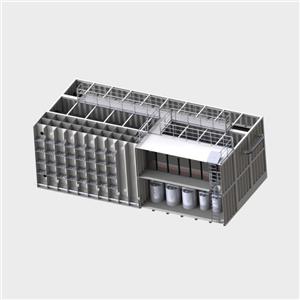
Structural Components
Filter influent weir plate
Filter media
Filter support layer
Air-water distribution filter blocks
Backwash air pipingFilter trough cover plate
Backwash Roots blower
Backwash clean water pump
Filter auxiliary valves / valves
Air compressor system
Filter automatic control system
Filter instrumentation
Electrical equipment & control (automation) equipment
Deep-bed filter piping / cabling
Other auxiliary equipment
Filter Media
The filter media in the denitrification deep‑bed filter serves a dual function: turbidity removal and biological denitrification.
Available media options:
High‑strength crushed ceramsite (expanded clay) uniform media
Conventional uniform quartz sand media
Sandwich‑Type Support Layer
With a thickness of 380–450 mm, the sandwich‑type support layer is an essential component of the deep‑bed filter. It not only supports the filter media to ensure bed stability during backwashing, but also provides the technical assurance for uniform water and air distribution.
Air‑Water Distribution System
To ensure uniform air‑water distribution and efficient air‑water backwashing, the filter is equipped with air‑water distribution filter blocks. Their unique structural design creates an internal air‑reflection chamber. During backwashing, air and water mix and are evenly distributed across the entire filter bed area. Two types of filter blocks are available to accommodate different backwash air inlet orientations.
Precise Carbon Source Dosing Control
When the influent BOD₅/TN ratio is > 3–5, the carbon source is considered sufficient for denitrification. When organic matter in the wastewater is insufficient to provide adequate electron donors for denitrification, external carbon source dosing is required.
Key features:
Submerged influent design to reduce dissolved oxygen in the influent, minimizing carbon source consumption.
Feed‑forward + feedback control mechanism for precise calculation of carbon source dosing rates.